The World’s No. 1 Islamic Caps Brand.

The History and Significance of Wearing a Kufi in Islam
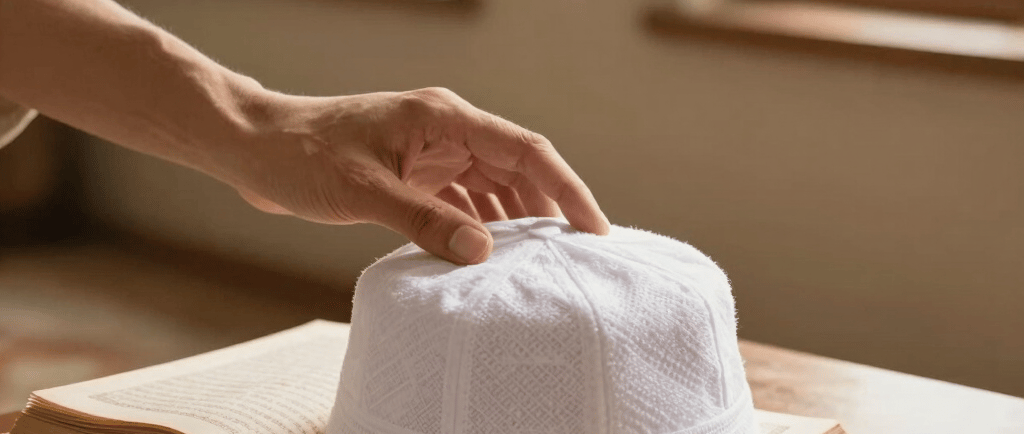
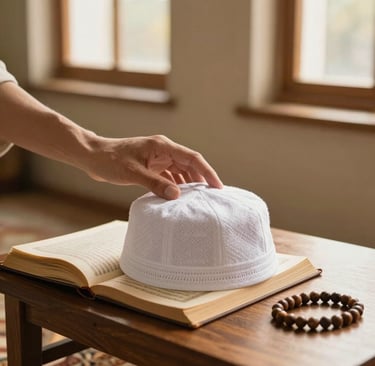
Covering the head has a long and deeply layered history in Islam, reaching back to the faith’s earliest generations. For many Muslim men today, slipping on a kufi each morning may feel like a small, quiet ritual—but it is one that ties directly to centuries of scholarship, devotion, and tradition. Understanding its roots can transform what might otherwise seem like a simple daily habit into a meaningful act of connection.
The Prophetic Example
Much of the significance surrounding head-covering stems from accounts of the Prophet Muhammad (peace be upon him) in hadith literature. Multiple narrations describe him consistently covering his head, whether in daily life or during prayer, with his companions rarely—if ever—seeing him without some form of headwear. For many Muslims, this consistent practice is the primary reason the tradition has endured for centuries; it represents a tangible link to the Sunnah.
The Quran encourages such emulation broadly, describing the Prophet's conduct as an excellent example for those who hope in Allah and the Last Day. Scholars often cite this principle as part of the broader rationale for adopting practices associated with the Prophet’s daily life, including head-covering.
A Scholarly Debate: Sunnah Ibadah or Sunnah Adah?
Islamic scholars have long debated how exactly to classify wearing a kufi. Some view it as Sunnah Ibadah—a directly religious act tied to worship, carrying its own spiritual reward. Others consider it Sunnah Adah—a cultural or customary practice of the Prophet’s time and place, rather than a specific religious commandment.
While this distinction shapes how some scholars discuss the ruling, a common thread runs through most opinions: performing the practice with sincere intention is considered meritorious regardless of its technical category. In essence, whether one views it as devotional or cultural, wearing a kufi out of love for the Prophet’s example carries spiritual weight in the eyes of the majority of scholars.
Beyond Religion: A Marker of Identity and Culture
While the religious dimension is central, the kufi has also accumulated enormous cultural significance across the Muslim world—far beyond its original devotional function.
In West Africa, for instance, patterns, colors, and embroidery styles can signal region, lineage, or social status, turning a simple prayer cap into a marker of identity and belonging. In South Asia, the topi has become deeply tied to specific religious occasions—many families reserve their finest embroidered pieces for Friday prayers and Eid, treating them as part of the celebration rather than everyday accessories. In Southeast Asia, the songkok and peci evolved into symbols carrying both religious and national weight, appearing not only in mosques but also in formal and political settings.
This interweaving of religious and cultural meaning is part of what makes Islamic headwear such a rich subject—the same essential garment carries different, additional layers of significance depending on where in the world it is worn.
A Daily, Quiet Reminder of Faith
Perhaps the most profound aspect of the kufi, across all cultures and traditions, is its quiet, ordinary role in daily life. Unlike garments reserved for special occasions, the kufi is often donned multiple times a day—during each of the five daily prayers, at the masjid, and frequently throughout regular daily activities.
This constant, understated presence is central to its power: it is not a grand display of faith, but a small, repeated gesture woven into the rhythm of everyday life. For many wearers, this repetition is exactly the point. The kufi becomes a physical, tactile reminder of faith that needs no words—simply putting it on before prayer is itself a small act of devotion, repeated so often that it becomes second nature.
Continuing a Living Tradition
Choosing to wear a kufi today means participating in a tradition with deep historical roots—one carried forward, adapted, and reinterpreted by generations of Muslims across vastly different cultures and continents. For many, the decision isn't about obligation; it's a personal expression of love for the example set by the Prophet Muhammad (peace be upon him) and a connection to a much larger, global community of believers who share that same simple daily practice.
Whether your kufi is a plain white cotton cap or an elaborately embroidered regional design, wearing it connects you to this long, living tradition—one stitch, one prayer, and one day at a time.
An-Noor Headwear
Structured crowns for daily devotion.
© 2026 An Noor Headwear. - Dignified simplicity in every stitch.
HERITAGE TAILORING - PRAYER-TESTED COMFORT
Support
Contact
annoorheadwear@gmail.com