
Kufi vs. Topi vs. Taqiyah: What's the Difference?
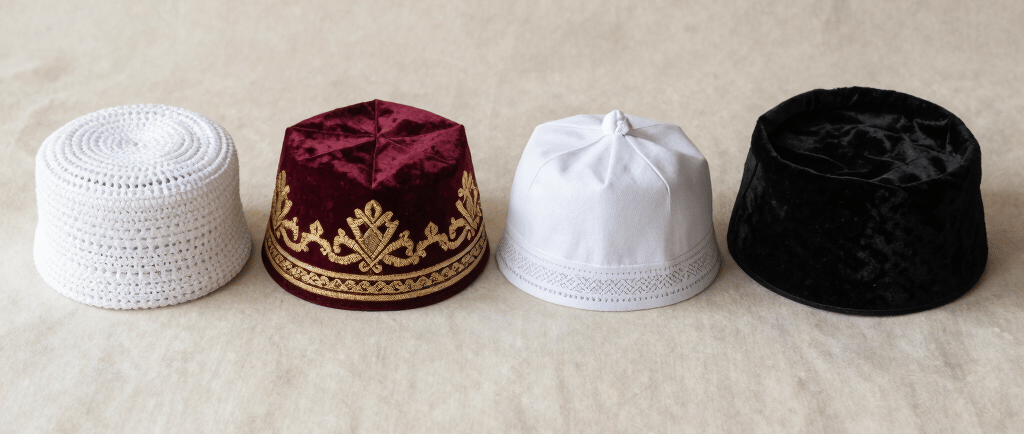
If you’ve browsed for Islamic headwear online, you’ve probably noticed that the same basic cap goes by different names depending on the shop. One listing calls it a kufi, another a topi, and a third a taqiyah. If you're new to this space, it’s easy to wonder: are these actually different products, or just different words for the same thing?
The answer is almost always the latter. The name usually depends on region, language, and cultural tradition—not on religious distinction. Knowing where each term comes from doesn’t just clear up confusion; it helps you shop with intention, whether you're looking to connect with your heritage or simply understand what you're buying.
Taqiyah – The Arabic Term
Taqiyah is the most widely used term across Arabic-speaking countries and the one most commonly found in Islamic scholarly texts. It refers to a simple, close-fitting skullcap traditionally worn under a turban or on its own. Taqiyahs tend to be understated—plain white or neutral cotton is common—reflecting their practical, everyday nature. Because it appears in religious texts, taqiyah is often the term you'll encounter in more formal or academic discussions of Islamic dress.
Kufi – Rooted in African and African American Tradition
Kufi is the term most associated with West Africa and African American Muslim communities, where the cap has taken on deep cultural meaning beyond its religious function. Kufis are often more structured than plain taqiyahs and frequently feature bold colors, geometric embroidery, or patterns that reflect regional identity, family tradition, or personal style. In many West African communities, the choice of pattern or color isn't incidental—it can signal where the wearer is from or which community they belong to, much like other garments in African fashion carry cultural markers.
Topi – The South Asian Term
Across South Asia—Pakistan, India, Bangladesh, and Afghanistan—topi is the universal term. South Asian topis come in a wide range of styles, from soft, breathable crochet-knit caps worn for daily prayer to stiffer, more structured designs brought out for Friday prayers (Jummah) and Eid celebrations. Embroidered topis with mirror work or metallic thread are especially popular for festive occasions and are often gifted during Eid.
Other Regional Names Worth Knowing
Beyond these three, you might also come across:
Peci – used in Indonesia, closely tied to national and religious identity.
Songkok – used across Malaysia and other Malay-speaking regions, often black and slightly tapered.
Takke – the Turkish term, typically referring to a simple, close-fitting, machine-knit cap in solid, neutral tones.
Each has subtle differences in shape, fabric, and cultural context—but they all serve the same essential purpose.
Why the Differences Matter Less Than You Think
At the end of the day, whether you call it a kufi, topi, taqiyah, or something else, the underlying purpose is the same: covering the head as a sign of humility, modesty, and respect during prayer and daily life. None of these regional variations changes the religious significance—they simply reflect the beautiful diversity of Muslim cultures around the world, each expressing the same core value through their own traditions of craftsmanship and design.
This is one of the most fascinating aspects of Islamic headwear: a single, unified practice interpreted through dozens of regional lenses, resulting in an enormous variety of colors, fabrics, and embroidery styles—all rooted in the same act of faith.
Choosing What’s Right for You
If you're shopping for yourself, think about which tradition feels most familiar or meaningful. If you grew up in a South Asian household, a classic embroidered topi might feel like home. If you're drawn to West African design, a bold patterned kufi could be the better fit. And if you simply want something clean, simple, and versatile, a plain cotton taqiyah is a timeless, practical choice that works with virtually any outfit.
Not sure which style suits you? Browse a collection organized by region and design to compare traditions side by side rather than guessing from a single product photo. Trying a style outside your own background can also be a wonderful way to appreciate the diversity of the Ummah—and the many ways the same act of devotion has been expressed across cultures and centuries.
Whatever term you use and whichever style you choose, the cap you wear carries the same quiet meaning: a small, consistent reminder of faith, worn every day, in every part of the Muslim world.
An-Noor Headwear
Structured crowns for daily devotion.
Home-Shop-Journal-Reviews-Contact
INQUIRIES
support@mihrabcapco.com
Sizing & Fit Assistance
Worldwide Shipping from London
© 2026 Mihrab Cap Co.-Dignified simplicity in every stitch.
HERITAGE TAILORING - PRAYER-TESTED COMFORT